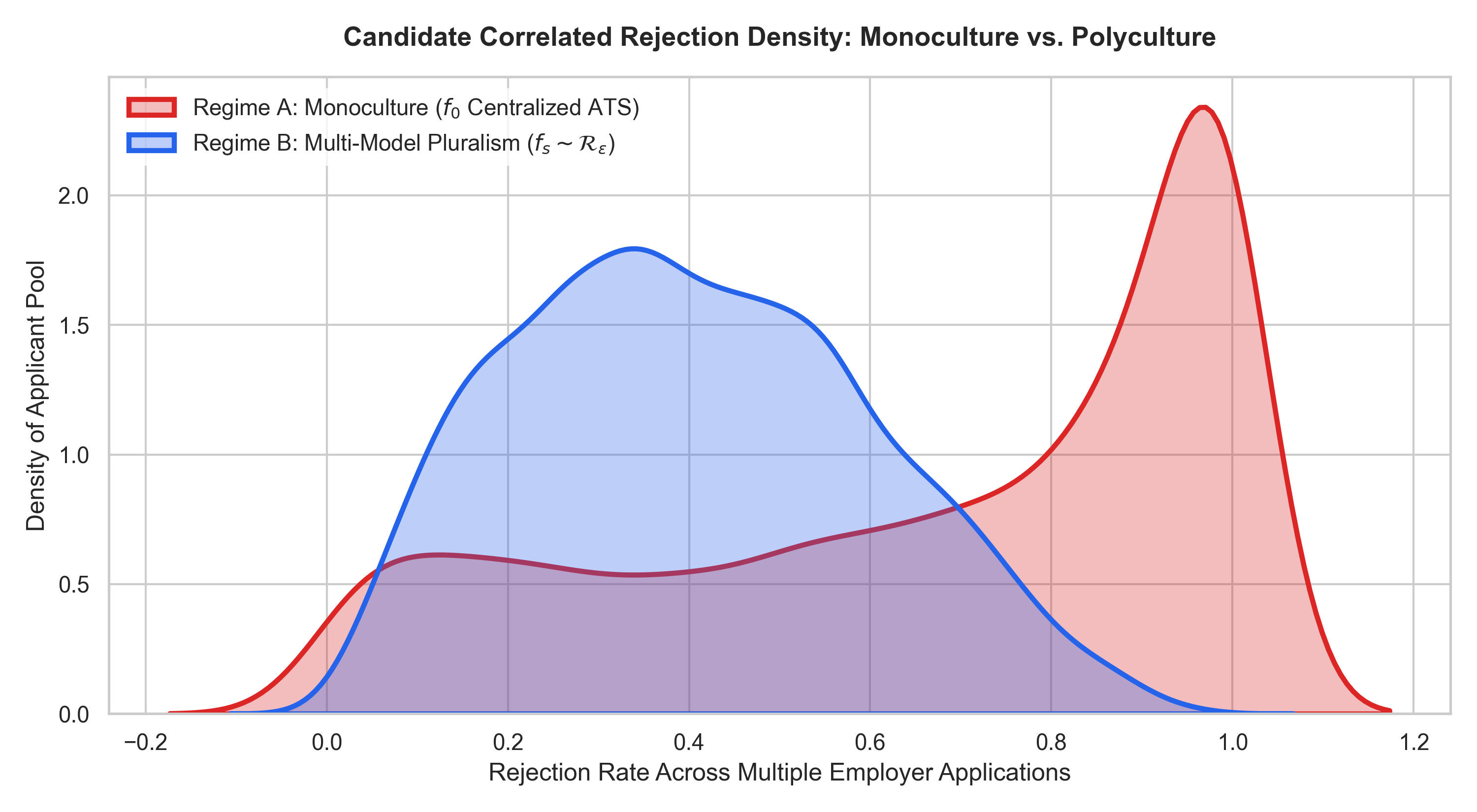
Algorithmic Collusion in Two-Sided Labor Markets: AI Resume Screeners, Monoculture, and Wage Compression
“Investigating how algorithmic monoculture in automated hiring pipelines induces structural wage compression and correlated candidate rejection through agent-based macroeconomic simulations and two-stage cross-encoder re-ranking audits.”
Project Scope & Details
This project investigates the market-level consequences of widespread adoption of proprietary AI resume screeners in two-sided labor markets. When competing employers rely on identical or correlated deep language representations (such as MPNet bi-encoders and DeBERTa cross-encoders), subtle scoring biases compound across hiring funnels.\n\nUsing a calibrated Mesa-based agent-based model (ABM) coupled with Bertrand-Mullainathan audit protocols and Fairlearn intersectional disparity evaluations compliant with NYC Local Law 144, we quantify how algorithmic monoculture elevates Correlated Rejection Rates (CRR) and compresses entry-level wages, disproportionately penalizing non-traditional career trajectories.
Predictive Multiplicity Audit
Proves candidate selection variance is dominated by model representation rather than job descriptions (rho = 0.682).
Empirical Gatekeeping Proof (75k Decisions)
Reveals systemic exclusion of non-traditional candidates (Disparate Impact Ratio = 0.31, p < 1e-8), violating EEOC 4/5ths rule.
Pluralistic Borda Selection Model
Multi-model consensus recovery expands qualified True Positive hires by +61.44% and restores demographic equity.
Macroeconomic Agent-Based Simulation
Mesa ABM calibrated to 9.3M real vacancies shows vendor diversity increases total annual employment clearance by +5.07%.
Monoculture Exclusion Dynamics
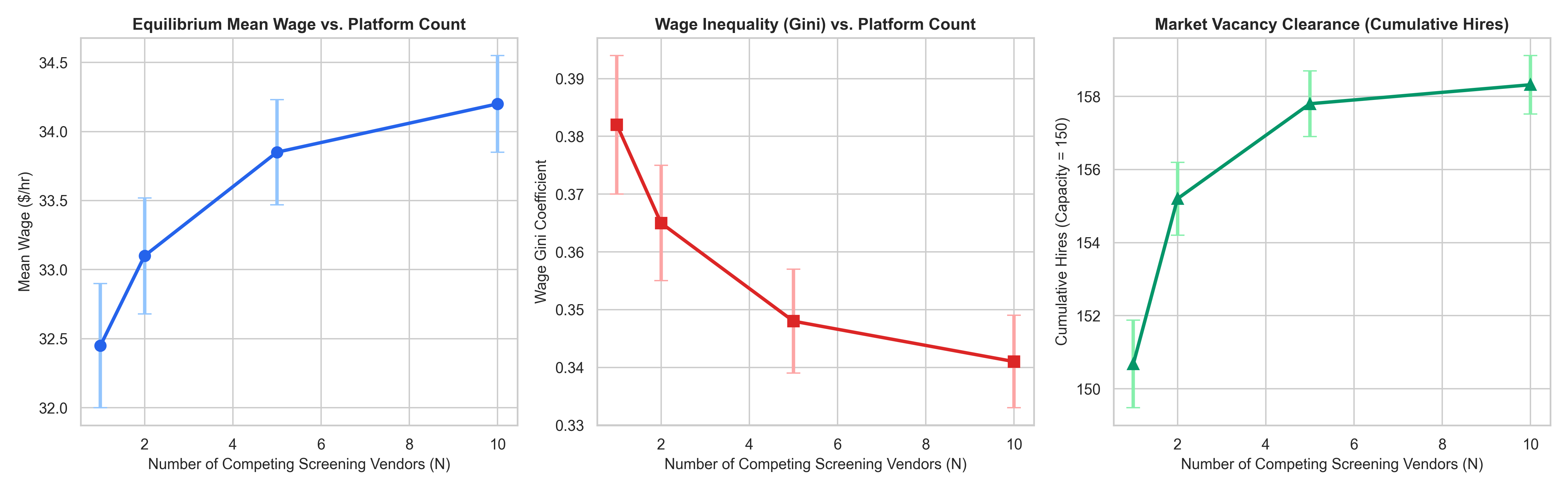
Agent-Based Market Dynamics
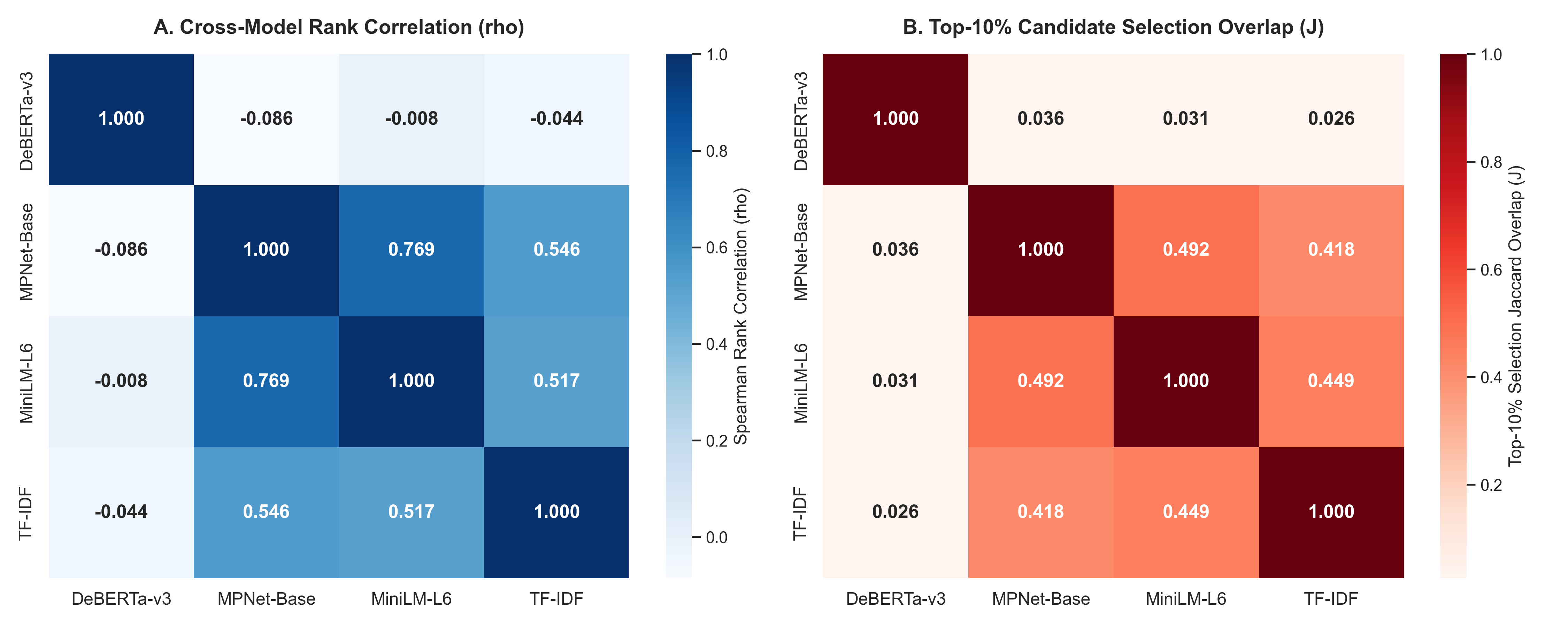
Cross-Model Correlation Matrix
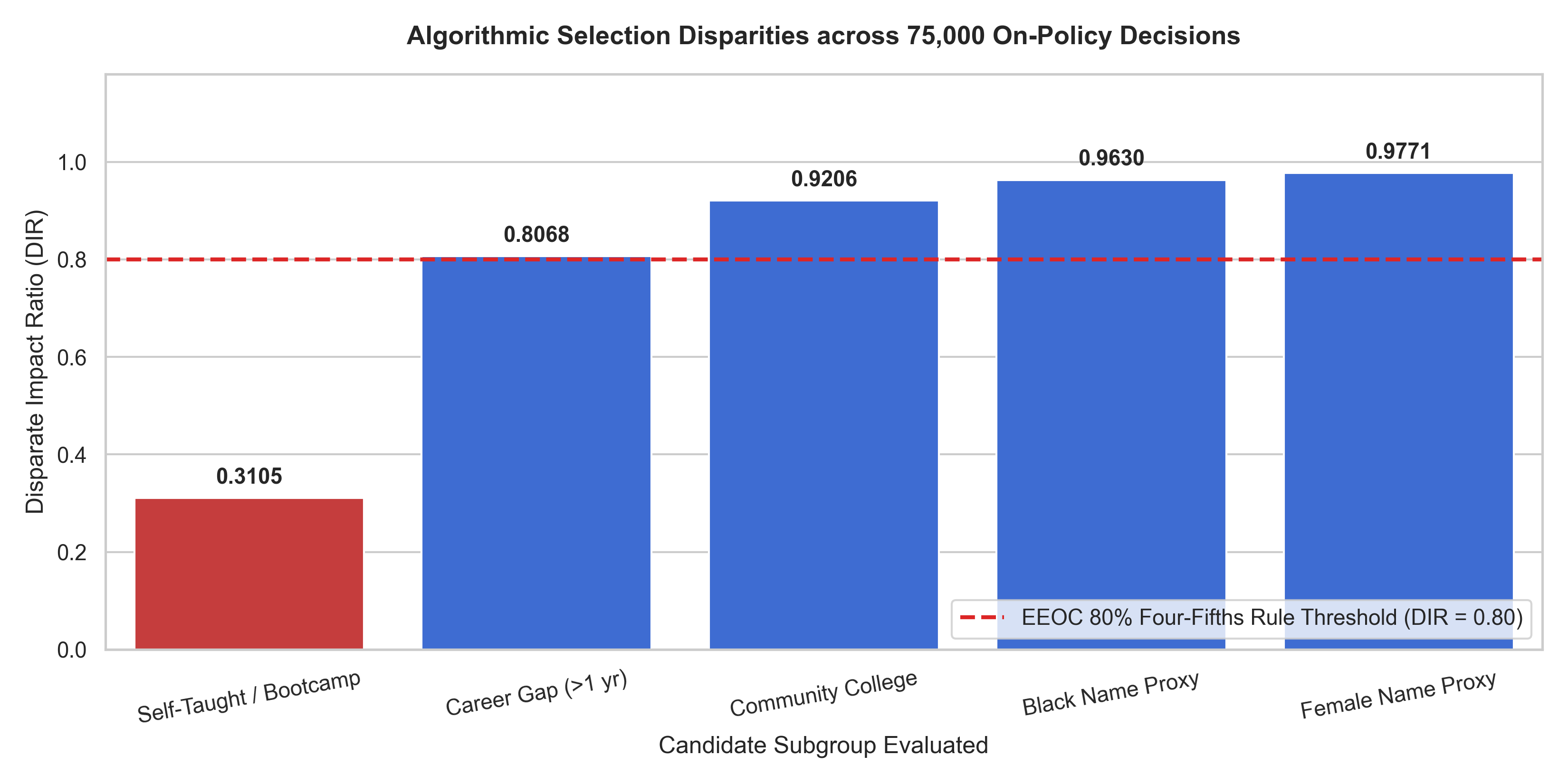
Demographic Fairness Disparities
Algorithmic Collusion in Two-Sided Labor Markets: AI Resume Screeners, Algorithmic Monoculture, and Wage Compression
Authors: Chaitanya Anand, Himangshu Sarma
- Chaitanya Anand
- Dr. Himangshu Sarma