“A modular standalone extended reality platform for upper limb stroke rehabilitation, featuring clinician-configurable tolerance corridors, dual-loop adaptation, and controller-free optical hand tracking on Meta Quest.”
Project Scope & Details
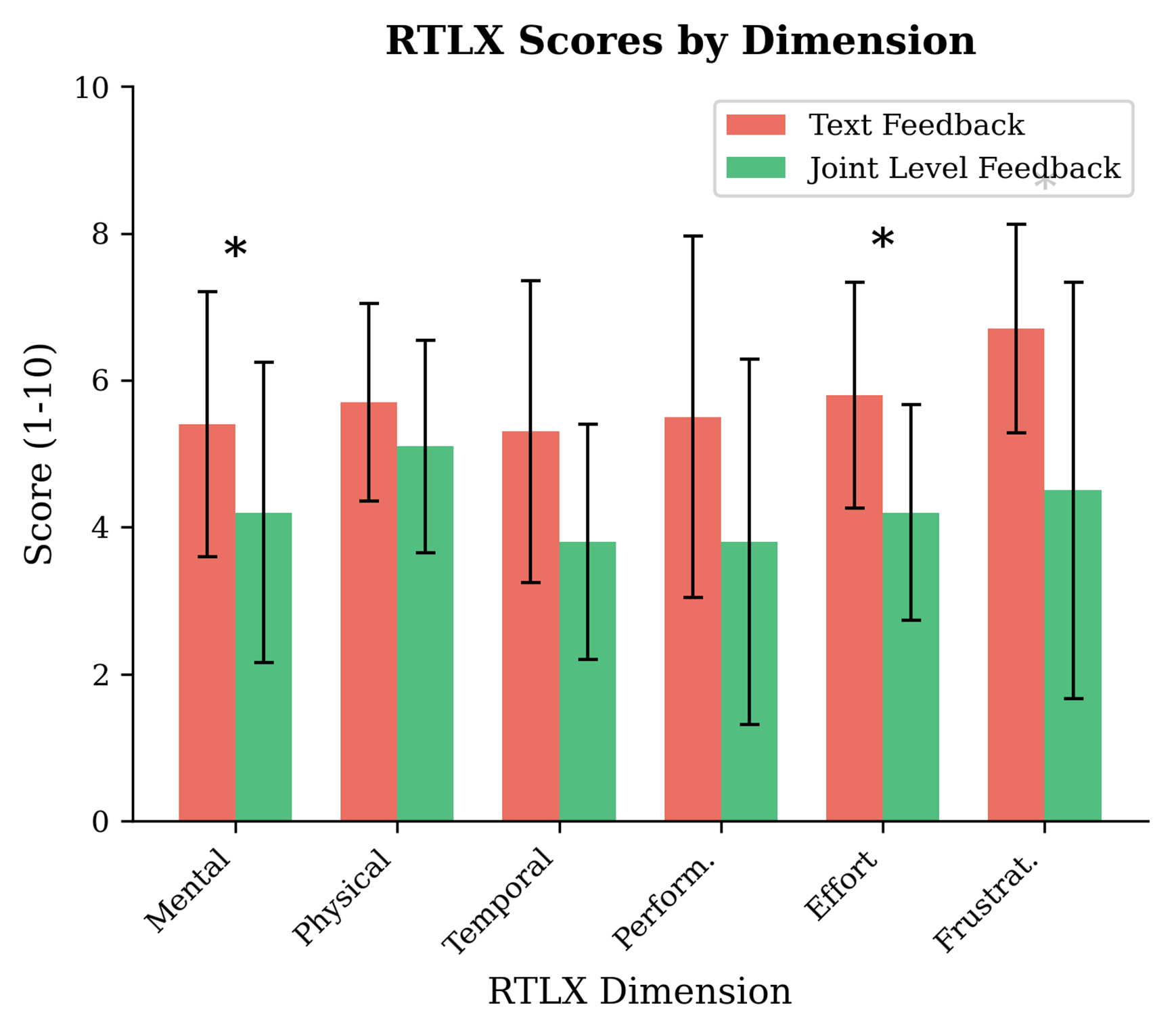
A modular XR rehabilitation system designed for stroke survivors. It decouples task presentation from kinematic evaluation windows, utilizing controller-free optical hand tracking on Meta Quest. Clinicians configure dynamic tolerance corridors across shoulder, elbow, and wrist kinematics, validated through an N=21 clinical evaluation (SUS 73.50, R-TLX 4.18/10).
Controller-Free Hand Tracking
Leverages native optical tracking on Meta Quest to enable natural motor exercises without bulky handheld hardware.
Clinician-Configurable Tolerance Corridors
Allows physical therapists to dynamically adjust angular joint tolerance bounds (shoulder, elbow, wrist) per patient.
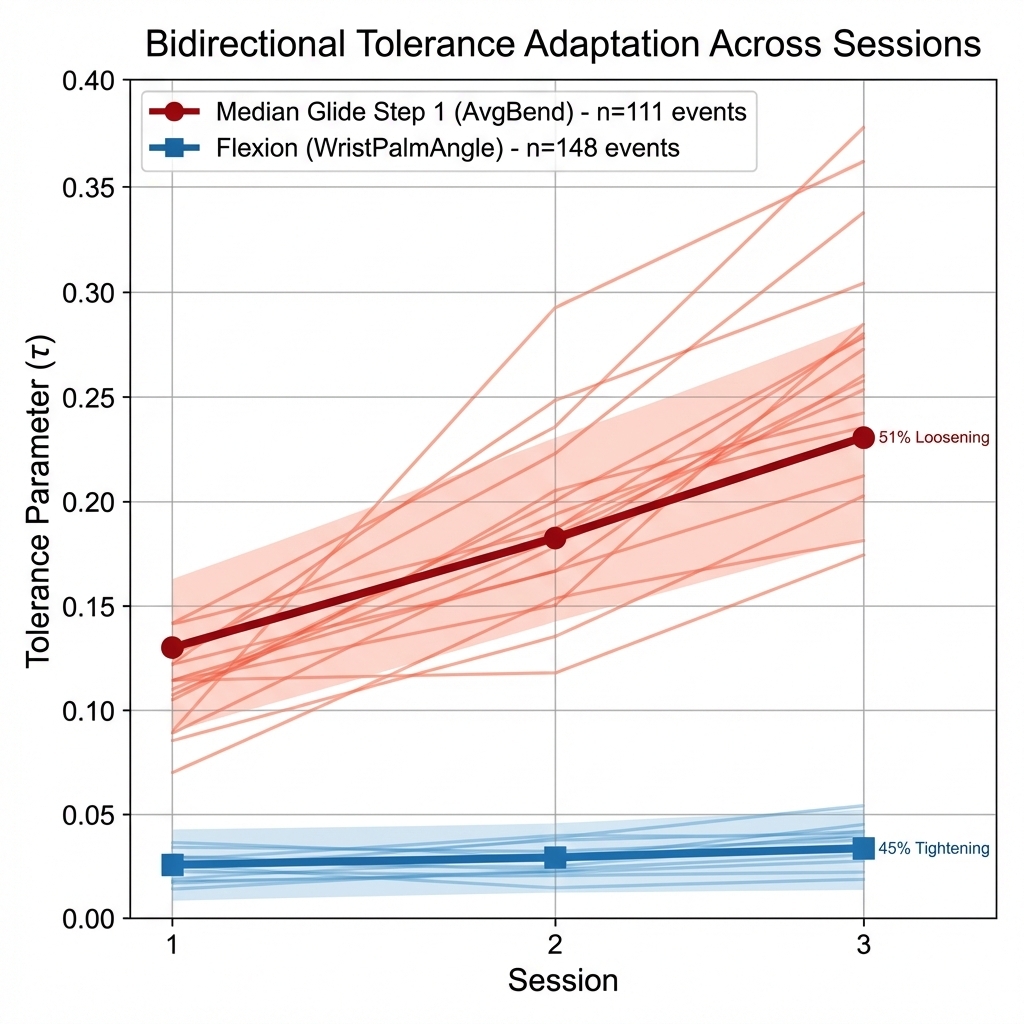
Dual-Loop Adaptation Model
Balances clinical diagnostic requirements with real-time gamified scaffolding, preventing patient frustration and dropout.
Kinematic Compliance Analytics
Captures 84.2% trajectory fidelity and provides clinicians with automated range-of-motion progress dashboards.
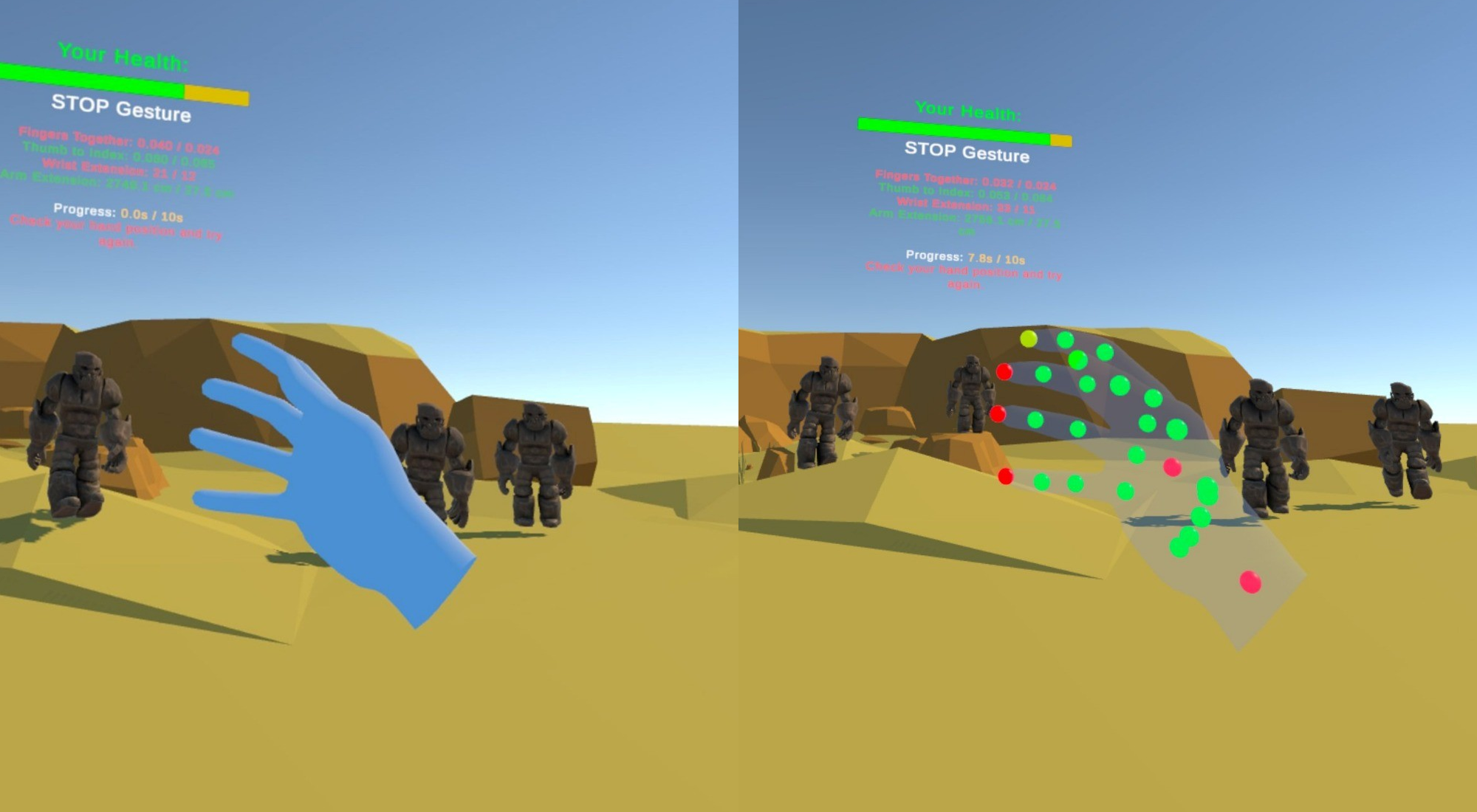
Modular Platform Architecture
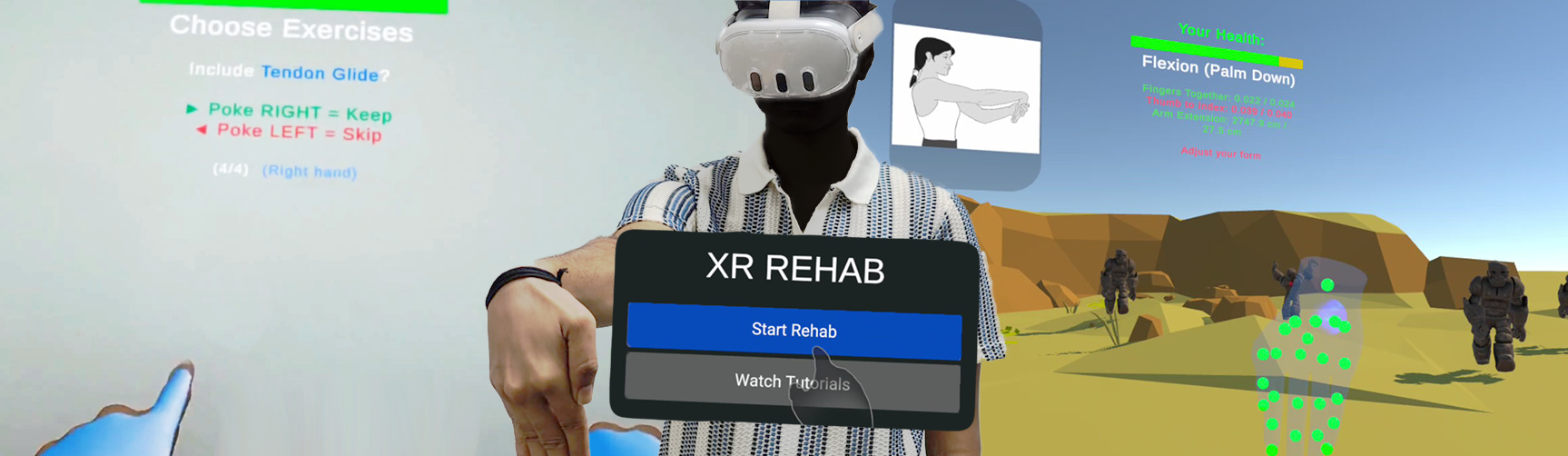
System Pipeline & Interaction Overview
Spatial Exercise Interface
Standalone XR Hardware Configuration
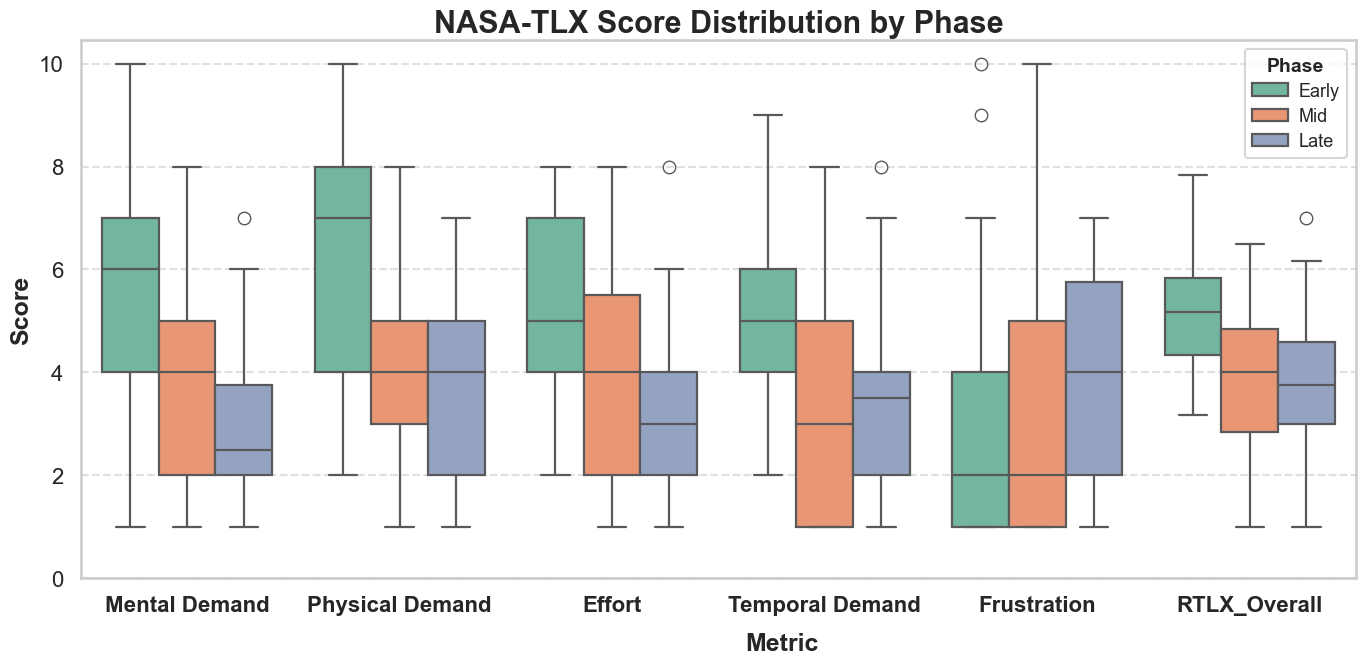
Kinematic Trajectory & Recovery Evaluation
Towards a Modular XR Platform for Personalized Upper Limb Rehab
Authors: Sambhav Manohar, Mohit Madhu, Chaitanya Anand, Abhijit Patil, Gabriel Zachmann, Himangshu Sarma
A Study in Transparent Adaptation and Joint-Level Feedback for Unsupervised Upper-Limb Rehabilitation
Authors: Mohit Madhu, Chaitanya Anand, Sambhav Manohar, Abhijit Patil, Prajwal Gundala, Himangshu Sarma, Gabriel Zachmann
- Sambhav Manohar
- Mohit Madhu
- Chaitanya Anand
- Abhijit Patil
- Prajwal Gundala
- Gabriel Zachmann
- Dr. Himangshu Sarma
- ▸IEEE ISMAR
- ▸ACM CHI EA 2026